Advanced Technologies: Mobile, NGN and VoIP - TikZ Figures
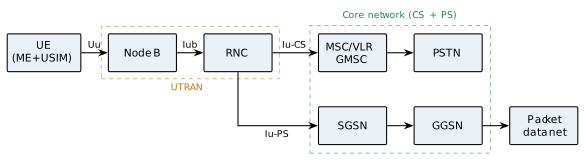
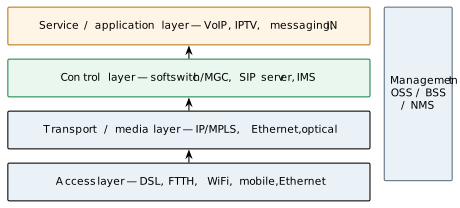
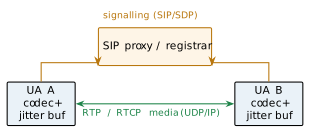
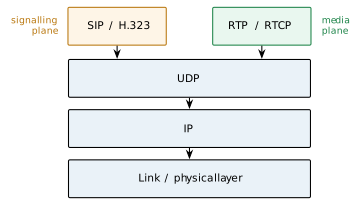
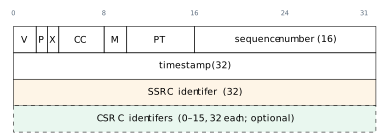
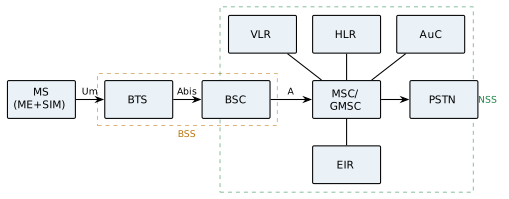
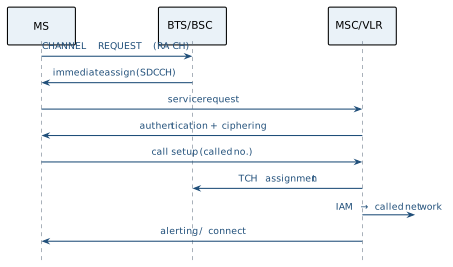
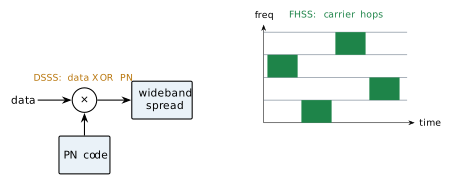
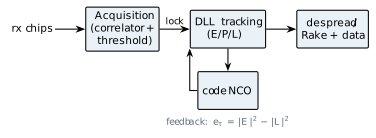
Fig: UMTS architecture: UE\,-\,Node B\,-\,RNC (UTRAN) with a core network split into a CS domain (MSC/GMSC) and a PS domain (SGSN/GGSN)Fig: NGN layered architecture: heterogeneous access feeds a common transport/media layer; control and service layers are separated; management (OSS/BSS/NMS) spans all layersFig: VoIP: SIP proxy/registrar handles signalling; once set up, endpoints exchange RTP/RTCP media directly over UDP/IPFig: VoIP protocol stack: SIP/H.323 signalling and RTP/RTCP media both run over UDP over IP over the link/physical layersFig: RTP fixed header (32-bit words): V\,2, P\,1, X\,1, CC\,4, M\,1, PT\,7, sequence number 16; then timestamp 32, SSRC 32, and an optional CC-sized CSRC listFig: GSM architecture grouped into the Base Station Subsystem (BSS: BTS+BSC) and Network Subsystem (NSS: MSC with HLR, VLR, AuC, EIR), toward the PSTNFig: GSM mobile-originated call flow: RACH channel request, SDCCH immediate assignment, service request/authentication/ciphering, call setup, TCH assignment and IAM toward the called network, then alerting/connectFig: Spread spectrum: DSSS spreads data by multiplying with a high-rate PN chip sequence (left); FHSS hops the carrier across frequency slots over time (right)Fig: DS-CDMA spreading/despreading sync chain: coarse acquisition, then an early/prompt/late delay-lock loop driving the code NCO until the prompt arm despreads data (Rake for multipath)